All sixteen-odd minutes of acid folk's finest moment, 'The Herald' is actually pretty unrepresentative of the group's oeuvre, which can be probably summed up as 'forest death music'. There aren't many groups who can claim to have a completely unique sound but this is one of them; Roger Wootton's death-rattle vocals and a mix of rangy acoustic guitars and hand drums are offset by slide bass, reeds and violins. Where Comus really stand out from other late sixties / early seventies folk-inspired groups is the malevolent streak throughout the music. Rather than a bucolic place to relax or the setting for a familiar folk ballad, the forest here is a real place of fear and bewilderment. The lyrics range from gothic lust to madness and fear of imprisonment, all examined with a forensic eye for detail that makes it sound as if the singer is actually enjoying the vista of fear and decay that he is describing. In addition, the cover artwork is truly awful - not as in bad, but awful as in 'it's a cover showing a malnourished, twisted grey creature in agony'. A two CD retrospective was issued a few years ago, with the essential (and very difficult) 1971 debut 'First Utterance' on one disc and the 1974 'To Keep From Crying' album on the other. The second effort is by no means a disaster, but is a bland and smoothed-out shadow of 'First Utterance', as if the band had been lobotomised following the bacchanal and frenzy of 1971. Enjoy the oddly uneasy lullaby that is 'The Herald' and then delve deeper into the undergrowth with the rest of 'First Utterance'. You won't have heard anything like it.

Monday, 15 November 2010

Monday, 8 November 2010
How Babies Are Made
This is 'How Babies Are Made', published by Time Life books in 1969. Blake Hampton is responsible for the wonderful illustrations. I haven't included the text (I hope everyone is clear on that sort of thing, and it isn't my place to tell you if not) but I will say that it is admirably forthright, combining the biological side of things with the emotional as well. I have included the perky little dog because I think it's rather amusing, and certainly unique as far as illustrations that I've seen. Although the overall effect is rather heartwarming, I do think that the children and babies look a little bit like Autons, which adds a tang of edginess to proceedings in general.


Seventies Graphic Design 3
Here are some more images from the Sheffield Yearbook. This time 1973, as promised;




Seventies Graphic Design 2
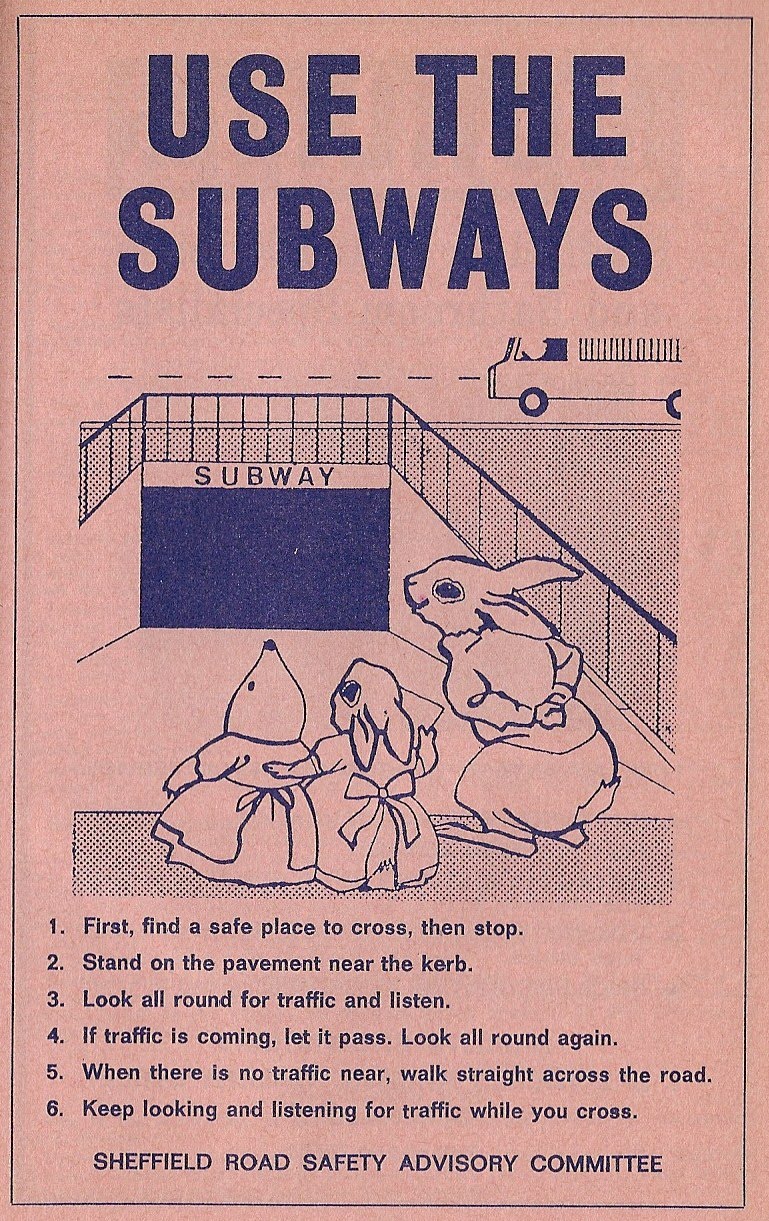
The images below were scanned from the Sheffield Year Book 1971. They were part of adverts, some of them the 70s equivalent of clip art, some of them designed specially for the company concerned. Taken in isolation and magnified considerably, they seem to develop new meanings; the grainy, ink-wet close up of an eye has become quite threatening, whilst the spindly-limbed telephone looks witchy, almost like a twentieth century familiar. There are more in the 1973 Year Book, which will follow shortly.


Friday, 5 November 2010
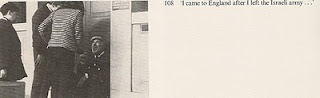
Film in Teaching - Interviews
Stills and quotes from a series of interviews with locals in South East London. Removed from their context, the quotes have a strange power and poignance.


Film in Teaching - Barabbas
I've recently come across two books published by B T Batsford about the use of film making in education. The first (and the origin of the following scans) is called 'Film in Teaching' by Keith Kennedy (Batsford, London 1972) and details how to use film and videotaping as a way of teaching primary and secondary school children. It is full of wonderful black and white stills and photographs from student films and I've been scanning like mad over the last couple of days. The first series, reproduced below, is from a play called 'Barabbas' written by 13 year olds. They look like stills from a Bugsy Malone-esque biblical epic as filmed by Peter Watkins.


The Tape Recorder in the Classroom

I love this book cover. The sheer delight of these boys is tangible as they crowd around the school's new Revox. There's something a bit 2001 about their exploration of this strange machine, as if it will pass on strange and magical new skills without their fully comprehending them, assisted by the op-art background and the sci-fi novel title font (John Weston sounds like a science fiction novelist doesn't he?)
In reality, it will just have a man saying "Allo Christophe. Bonjour Jean-Claude." in a decidedly non-schoolboyish voice, whilst everyone giggles at the word 'piscine'. But that's technology for you; it can only deliver so much. It may, however, be good for this:

Subscribe to:
Posts (Atom)